14 Days

2-12

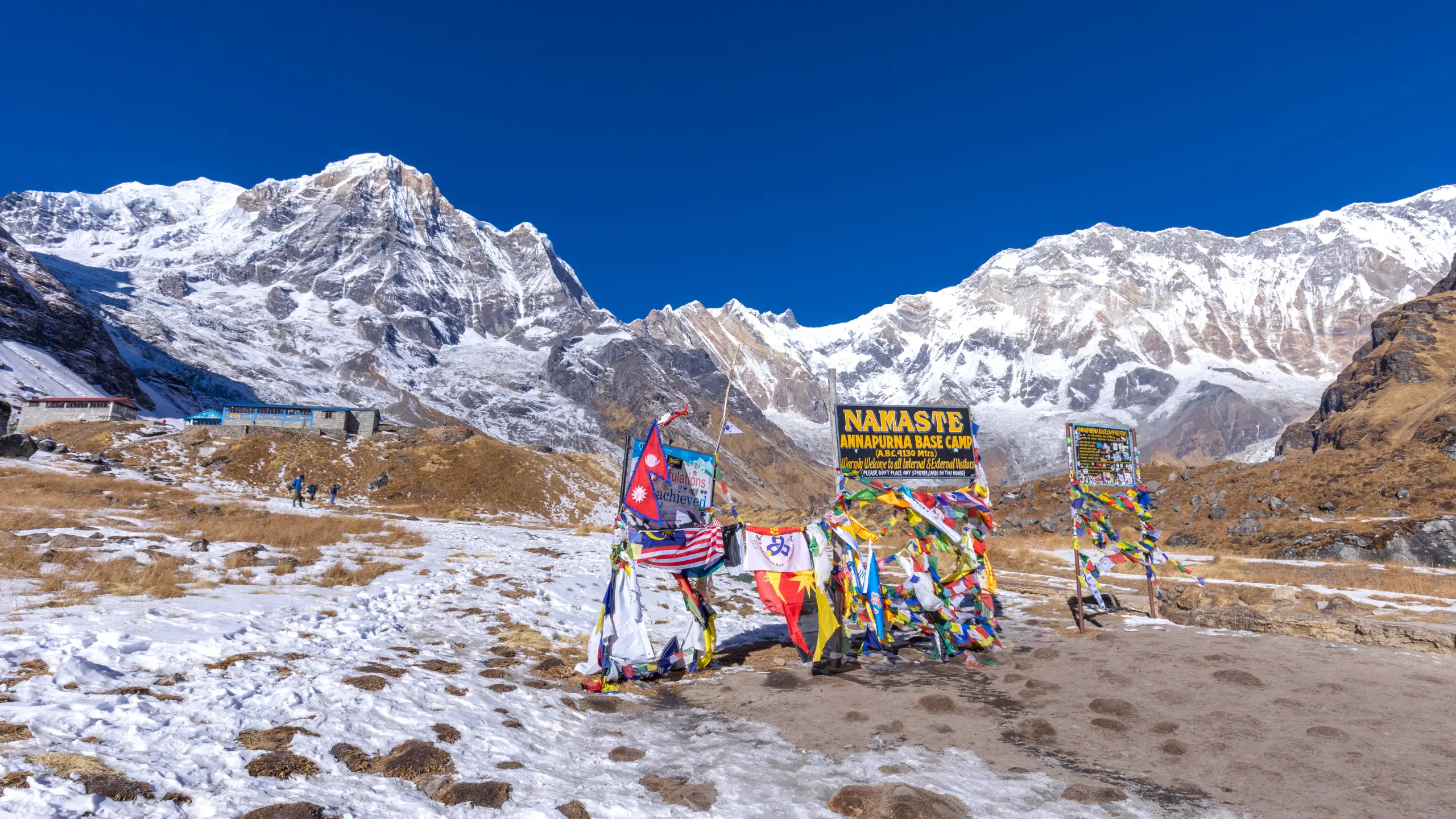
4,130 Meters

Mar-May, Sep-Dec
Annapurna: A Stunning Himalayan Mountain Range
The Annapurna mountain range is one of the most famous in the world, located in the Himalayas of Nepal. Known for its towering peaks, breathtaking landscapes, and thrilling trekking routes, this region attracts adventurers from across the globe. The name Annapurna comes from the Hindu goddess of nourishment and abundance.
The Annapurna Massif
The Annapurna Massif is a group of majestic peaks, with Annapurna I standing as the highest at 8,091 meters (26,545 feet). It is the 10th highest mountain in the world. Other notable peaks in the range include Annapurna II, III, IV, and Annapurna South, each offering unique challenges and stunning views.
Climate & Best Seasons to Visit Annapurna
The climate in the Annapurna region varies greatly due to its diverse altitudes and terrain. The area experiences four distinct seasons, each offering a unique trekking experience.
Spring (March to May) – Best for Colorful Landscapes
Spring is one of the best seasons to explore Annapurna. The weather is mild and stable, with warmer temperatures and rhododendron forests in full bloom, creating a stunning, colorful landscape. Clear skies during this time provide breathtaking views of the snow-capped peaks.
Summer/Monsoon (June to August) – Wet but Lush
Summer marks the monsoon season, making it the wettest time of the year. Heavy rainfall can cause muddy trails, landslides, and poor visibility, making trekking more challenging. However, the region becomes lush and vibrant, and with fewer tourists, it offers a quieter experience for those willing to brave the conditions.
Autumn (September to November) – Best for Clear Views
Autumn is another peak season for trekking in Annapurna. The weather is stable and clear, offering excellent visibility of the mountains. Temperatures are comfortable, and the trails are dry and less slippery compared to the monsoon season. The golden autumn foliage adds to the region’s breathtaking beauty.
Winter (December to February) – Cold but Scenic
Winter is the coldest season, with freezing temperatures at higher altitudes. Some high passes may be blocked by snow, making certain treks inaccessible. However, lower-altitude treks are still possible, and the crisp, clear skies provide stunning views of the snow-covered peaks.
Trekking Tips & Weather Precautions
Weather conditions in Annapurna can be unpredictable, so trekkers should always be prepared for sudden changes. Packing proper gear and warm clothing is essential for safety and comfort. It’s also a good idea to check weather forecasts and local conditions before starting your journey.
No matter the season, Annapurna offers an unforgettable trekking experience with its diverse landscapes and stunning mountain views.
Arrive in Kathmandu and transfer to a comfortable hotel in a quiet location.
Attend a pre-trek briefing and explore Thamel’s lively atmosphere.
Take a short scenic flight to Pokhara, Nepal’s beautiful lake city.
Check into a cozy lakeside hotel with modern amenities.
Relax with a leisurely walk around Phewa Lake before dinner.
Travel by private vehicle to Nayapul and begin trekking.
Walk through terraced fields and local villages at a steady pace.
Stay in a comfortable teahouse with private rooms and hot showers.
Trek through rhododendron forests and stone staircases.
Stay at a well-maintained lodge with mountain-facing rooms.
Enjoy a warm meal by the fireplace and relax before the next day’s hike.
Early morning hike to Poon Hill (3,210m) for a breathtaking sunrise over Annapurna.
Enjoy a hot cup of Himalayan tea before descending to Tadapani.
Stay in a guesthouse with a cozy atmosphere.
Descend through oak and bamboo forests, crossing scenic suspension bridges.
Arrive at Chhomrong, a beautiful Gurung village with spectacular views.
Trek deeper into the Annapurna Sanctuary, surrounded by towering peaks.
Stay in a comfortable lodge with warm bedding and good food.
Follow the scenic Modi Khola River, gradually gaining altitude.
Stay in a cozy teahouse with freshly cooked meals.
Reach Annapurna Base Camp, surrounded by snow-capped peaks.
Celebrate with a warm meal while admiring 360° mountain views.
Stay overnight in a well-equipped teahouse with basic comforts.
Begin your descent at a steady pace, taking in the changing scenery.
Stay in a familiar, comfortable lodge for a restful night.
Walk down to Jhinu Danda, known for its natural hot springs.
Enjoy a refreshing soak to soothe your muscles.
Complete your trek and take a private vehicle back to Pokhara.
Check into a comfortable lakeside hotel for a well-earned rest.
Fly back to Kathmandu and check into a boutique hotel.
Enjoy a relaxed evening or optional cultural tour.
Transfer to the airport for your flight home.
Permit Requirements for the Annapurna Base Camp (ABC) Trek
Since the Annapurna Base Camp lies within the Annapurna Conservation Area, trekkers are required to obtain the following permits from the Nepalese government:
TIMS Card (Trekkers’ Information Management System)
ACAP (Annapurna Conservation Area Permit)
These permits can be obtained at the Tourism Information Center in Pokhara. To issue the permits, you’ll need to bring:
A copy of your passport.
Valid travel insurance.
Two passport-size photographs.
Note: The TIMS card and ACAP are valid for a single entry only. If you plan to re-enter the area, you must obtain new permits.
If you contact us prior to your arrival in Nepal, we can arrange all necessary permits and documentation for you.
Trekking Equipment Checklist for ABC Trek
Trekking to the Annapurna Base Camp requires thoughtful packing. It’s crucial to balance between being well-prepared and traveling light, as excess baggage can slow you down and increase risk in high-altitude conditions.
Important Tips:
Adjust your gear based on the duration of yo ur trek and the season.
Underpacking can leave you exposed to the elements, while overpacking can be burdensome.
The Annapurna Base Camp trek is a moderate-difficult trek that has its challenges, but it’s doable for even first-time trekkers. It is also suitable for beginners and experienced hikers from different parts of the world trek to enjoy the Nepal Annapurna Base Camp Trek. Compared to other treks in Nepal, it’s on the shorter and easier side, making it reachable for trekkers who are determined and reasonably fit. The trek involves going up and down, especially at higher altitudes where there’s less oxygen, so proper acclimatization points are necessary.
One thing to note is the trail has a bunch of stone steps, so after a day of tackling these steps, your leg muscles are likely going to feel it. To make things easier, some people hire a porter to carry most of their stuff, leaving them with a lighter backpack for the journey.
The difficulty of the ABC trek also depends on the season you wish to trek. Annapurna base camp trek route during the peak trekking seasons from March to mid-May and from September to mid-December is less difficult. In contrast, the winter season is not recommended for beginners. Sometimes, the rainfall makes the route muddy and the heavy snowfall during the winter makes it more difficult to trek in trails.
ACAP Annapurna Conservation Park fees and the TIMS Card, which may be obtained in either Pokhara or Kathmandu, are required. The officials will check your permit and other necessary documents at the entry point. Similarly, this permit lasts until you leave Annapurna Area.
Depending on the level of your fitness and experience in high Altitude Trekking, the ABC trek takes a week (7 days) if you are a complete beginner. However, if you are an experienced hiker and can trek 7-8 hours every day then we have a short itinerary of only 5 days for Annapurna Base Camp Trek.
Our proposed Annapurna Base Camp trek itinerary covers a total distance of 58 kilometers starting from Jhinu Danda. Other routes such as the one starting from Nayapul are 76 km long and an alternative track starting from Kande is 84 km.
Annapurna Base Camp trek is generally safe, but be cautious during the winter season due to potential avalanches. Our experienced guides are aware of avalanche risks and will take necessary precautions.
WiFi is available at some teahouses, but it’s often slow and may have a charge. Solar energy or generators are typically the sources of electricity, and charging devices might have a cost. Consider purchasing a local SIM card for connectivity.